
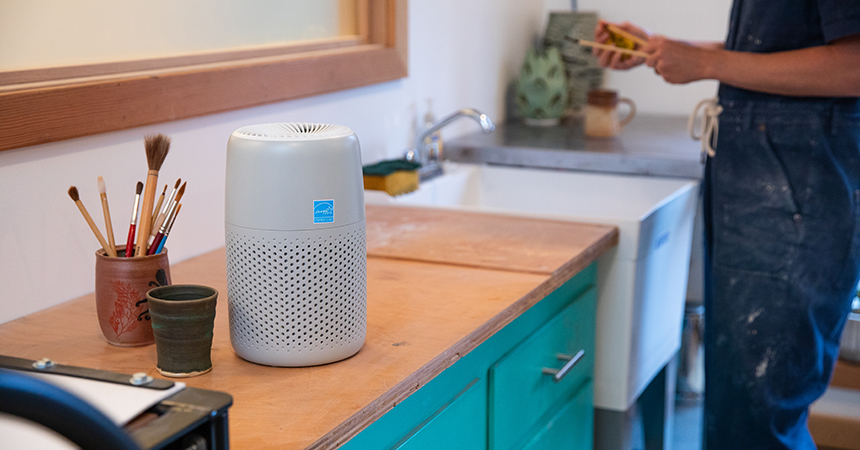
Because we spend so much time in our homes, indoor air quality can have a significant impact on our health. Poor air quality in the home can exacerbate allergies, asthma and other respiratory illnesses. We asked Casey Phillips, the owner of Abode Energy LLC and an expert in residential energy efficiency and healthy homes, to explain what can cause poor indoor air quality and what homeowners can do to improve it.
What can degrade the quality of air inside the home?
Many people keep windows and doors closed during the coldest and warmest months of the year, running heating and cooling systems rather than allowing fresh air to circulate. Poor ventilation allows dust, pollen and pet dander to accumulate. High humidity from a lack of ventilation can cause mold growth, which degrades overall air quality. In addition, radon, carbon monoxide, volatile organic compounds (VOCs) and off-gassing building materials are invisible contributors found in many homes.
In older homes, leaky ductwork can be another significant cause of poor indoor air quality. Leaky ducts running through an attic or basement can pull in contaminants such as dust, mold, rodent droppings and toxic insulation material and spread it through your home.
What can homeowners do to improve the air quality in their homes?
Increase ventilation. It’s easy to increase ventilation by simply opening windows, but that’s not always practical when temperatures are very low or very high. Keeping your heating and cooling system in good working order encourages air to circulate adequately throughout your home. Be sure to get systems serviced and replace air filters each year.
Use a home air purifier. Using an air purifier can bring peace of mind to homeowners by removing fine particles created from forest fires, pollen and smog that may enter from outside. By eliminating contaminants from the air, air purifiers can help reduce allergy flare ups, asthma episodes and other illnesses — especially during cold and flu season. If you have pets, an air purifier also helps keep dander and fur in check. Be sure to select the right size purifier for the room you plan to use it in. Most air purifiers’ filtration capacity is sized to the square footage of the room or zone that the air purifier will be placed in.
Update exhaust fans. Moisture buildup can lead to mold issues. Replace low-quality or low-flowing bathroom exhaust fans with high-quality fans to remove moisture adequately. Also, check to ensure that your bathroom fan is ducted to the outside. Sometimes bathroom fans simply pull moisture up into the attic, which can contribute to the buildup of mold and rot in that space.
Control humidity. Water seepage in the basement during heavy rain, either through the walls or seeping up from the foundation, can increase moisture in the air and encourage mold growth. Consider using a dehumidifier to help reduce humidity to below 55% in the home. Most programmable thermostats will display humidity levels on the screen or you can use a digital temperature and humidity device to monitor indoor humidity levels. It is also important to address any seepage issues.
Use nontoxic cleaning products. Many cleaning products release VOCs and other chemicals such as ammonia, bleach and fragrance, which can all contribute to respiratory problems. Natural cleaning products can be just as good for basic cleaning needs. If you require a chemical cleaning product, always be sure to have good ventilation and consider wearing a mask.
What if simple measures do not resolve your home air quality problem?
If people in your home have issues with allergies, asthma or other respiratory conditions, you may want to consider completing a home energy assessment or energy audit. Poor air quality can come from so many different places, and when multiple issues are contributing, it can be challenging to determine how to fix problems. Having expert help is key. An Energy Trust trade ally contractor will check out your attic, go into your crawl space, test for duct leakages and try to pinpoint other potential issues.
Some air quality issues may be caused by another energy-related issue in the home. Consulting someone with building systems expertise and diagnostic tools can help uncover systemic imbalances or problems. These experts take a holistic approach to understand how the attic space, roof, wall insulation, HVAC system and other areas of the house function together. A problem in any of these areas could drive moisture into a wall cavity, creating mold or potentially releasing particulate matter into your indoor air.
Your energy assessment contractor will consider things like how leaky your house may be, the age of your house and whether you have any weatherization sealing or duct sealing.
Are there any incentives available to help address home air quality issues?
Energy Trust offers discounts on home air purifiers and other incentives to help offset the cost of some of the updates, repairs and improvements recommended by an energy expert. Learn more about Energy Trust home energy assessments.