
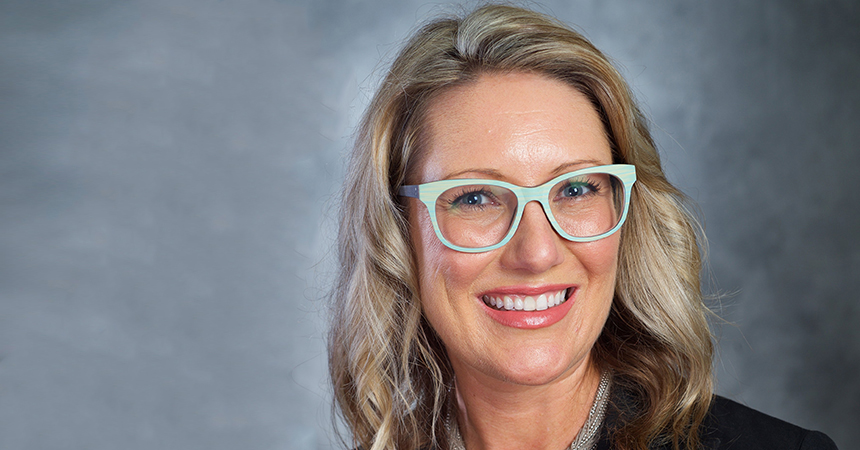
This is a part of a series of blog posts amplifying community voices. These views reflect the perspective of the Changemaker and do not necessarily represent those of Energy Trust.
Summer Fowler grew up on a houseboat in Portland, where every day she witnessed how urban development impacts the environment and waterways. This led her to an architecture career where she has continually sought ways for humans to live in harmony with the natural world.
When she founded her sustainability consulting firm, EcoREALSolutions, in 2009, Summer quickly became an instrumental advocate of high-performance building design, including Energy Trust of Oregon’s Path to Net Zero and other responsible building strategies for projects throughout the Pacific Northwest. She has served as board member and chair of the Oregon Association of Minority Entrepreneurs, and partners with other small firms on projects whenever she can.
Can you take us back to the beginning? Where did you grow up, and were there any early experiences or influences that planted the seed for your interest in sustainability and the built environment?
I grew up on a houseboat in Portland that my dad designed and built in the ’80s. The Willamette River was my backyard, and I spent my summers swimming to Ross Island. I was so in love with the river, and it absolutely influenced me. I got to play like Tom Sawyer even though we lived 10 minutes from downtown. But there were also times when there was sewer overflow in the river and we couldn’t swim. I knew the built environment was hurting the natural environment, which is a big reason I chose a career in architecture.
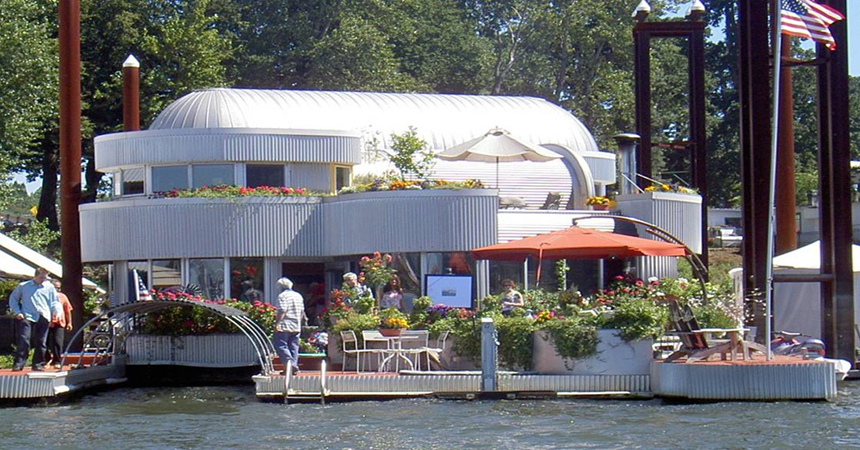
In 1985, Summer’s father, Buzz Gorder, built the family’s home: A houseboat on the Willamette River in Sellwood, near Oaks Park and Ross Island.
How did your educational path shape the direction of your career? Were there professors, programs, or pivotal moments that pointed you toward high-performance building design?
I started architecture school at University of Oregon in 1999, and though green building was not yet being talked about, passive design was already a cornerstone of their program, including good use of daylight, site orientation, natural ventilation for efficiency and how to build in the best way for the environment.
My first job was with Sienna Architects, which was exciting because I knew I’d get a lot more experience at a small firm. I started Sienna’s sustainability team with fellow Oregon architect Greg Acker, who had been doing sustainable design for 40 years. I had seen the 2030 sea level charts and how many coastal communities could be direly impacted, and that made me want to start shouting from the rooftops the importance of building for the future.
Did you have a favorite project or outcome of forming the sustainability team at Sienna Architects?
Locally, one of the most exciting projects came out of a grant we received from the City of Portland to build one of the first living buildings in the area: June Key Delta Community Center for Delta Sigma Theta Sorority. The organization does a lot for the community, and we turned the old gas station they were based out of into a model of equity and sustainability using reclaimed materials, regenerative energy, harvested water and a community garden. It really showed how sustainability is interconnected with social equity, and how it can lift up a community.
You started your sustainable design consulting business, EcoREAL in 2009. Not an ideal time to become an entrepreneur, especially in the architecture space.
People definitely thought I was crazy. I had to really make the business case that sustainability should be integrated into building design, not an add-on.
Energy Trust was a big part of finding incentives to do my work, and when they started Path to Net Zero I introduced it to a lot of projects, even if it didn’t seem attainable. It doesn’t always take special technology to reach net zero, if energy use intensity on a project is low enough. I’d use it for natural ventilation studies, site orientation, maximizing daylight, as well as practical incentives like good insulation which could result in a smaller HVAC system.
Besides leveraging Energy Trust’s Net Zero model, were there mentors or organizations that helped you get a leg up when you started your business?
Sam Brooks, who founded the Oregon Association of Minority Entrepreneurs (OAME), was a true changemaker and mentor who was ahead of his time in making sustainability accessible and equitable. In the 80’s, he was told his idea for OAME was impossible, before turning it into a 600-member non-profit that holds one of the biggest convenings for small business every year. Becoming the first Chair after his retirement was a humbling honor.
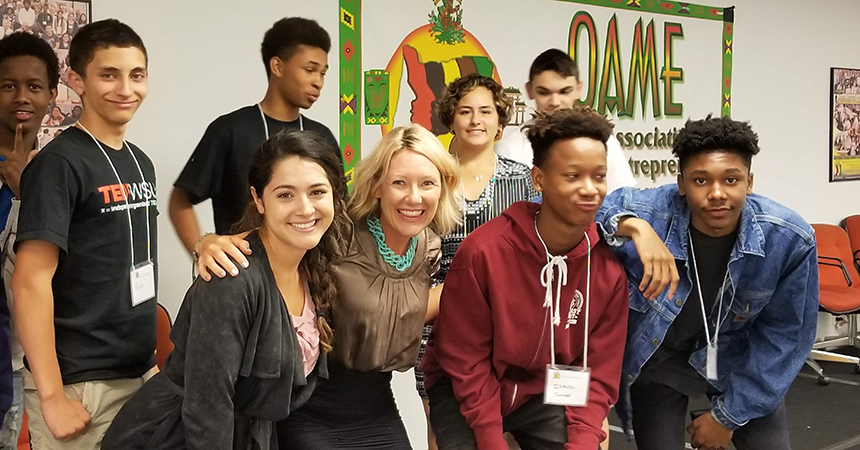
Summer with attendees at the 2024 Oregon Association of Minority Entrepreneurs (OAME) Conference.
Today, do you see equity being integrated with sustainability practices and policy? Do you think their interconnectedness is better understood?
LEED 5 integrates a lot of equity, and it’s LEED’s framework that many city policies lean on, so I’m encouraged that there’s more general awareness. I attended the first WELL Building AP workshop at the Cleveland Clinic, which led me to promote the Well Buildings Institute’s framework that considers a building’s health, safety, equity and energy performance all in one certification. This makes the workplace more comfortable for everyone, like nursing mothers who need pumping rooms (rather than a mop closet) to pump breastmilk. I was also on the international WELL Equity committee to help shape the standards that help cities, public agencies and corporations be more equitable.
Speaking of equity and interconnectedness, do you notice that contractors and others in the trades are included in planning discussions from the outset of projects?
Yes. It’s encouraging that contractors and facilities managers are at the table more often, for planning conversations. If you involve trades to help answer questions before you build, you’re going to have a healthier, more sustainable building. They have the best insight on the headaches that can occur when installing systems. They can speak to durability and lifecycle issues of systems and materials. It’s about collaboration, which should be a best practice. If we’re not working together and sharing resources we’re not going to get where we need to be.
An integrative process is the key to sustainability, and Energy Trust’s support and incentives for holding early design assistance meetings have helped it become commonplace for owners, architects, contractors, engineers and facility managers to get together from the beginning of a project. My favorite role is to facilitate those meetings and open the teams’ eyes to the possibilities they didn’t think were possible through the lens of human, environmental and life-cycle impacts.
Do you think keeping moms in the workforce, if that’s where they want to be, is important for building a sustainability-minded workplace culture, and built environments?
There can still be a stigma around pregnancy, even though it’s not right or even legal. But we need moms in the industry. We’re highly efficient, and we often care more about the impact we make professionally, after having children. I tried to hide my first pregnancy because people kept asking if I was going to shut down my business to be a mom. I had already been a professional for 20 years at that point. Becoming a mom is a learning curve, but my career is also my baby. Also, my mom is my business partner in ecoREAL. It is a lifelong partnership, and I hope to see more businesses like it in the building industry.
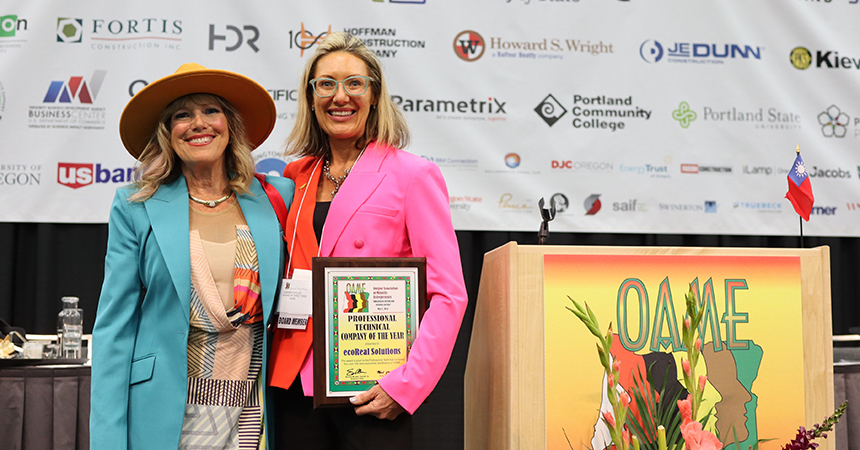
Summer with her business partner and mother, Pamela Gorder, at the OAME Conference, after winning the award for Professional Technical Company of the Year, for their Green Canary Software that helps developers build projects that are more sustainable.
You stuck with your business, and now you’re raising two children.
COVID had a strange silver lining. Despite the huge crisis, it fostered an understanding of working from home, with everyone having dogs or kids in background. We got used to it, and our human side became acceptable. We were more than just workers.
After the pandemic it was great to be able to see colleagues in person again, but what has stuck around, thankfully, is some workplace flexibility, empathy and understanding. I get to wake my kids up and even feed them lunch, and my daughter gets to see what I do, and it’s had an influence on her.
What advice would you give to a young person wanting to get into a career in sustainable design?
I started my career doing a ton of volunteering. I joined any committee that would have me: AIA Board, Architects Without Borders, Committee on the environment, Emerging Professionals, OAME, and equity committees at Portland Public Schools, Port of Portland and others. Just being part of those conversations can give you great perspective on the challenges and solutions in a community. You can become someone who understands the needs in the market and where change needs to happen. Getting out in the real world and interacting and being part of positive change is where it’s at.
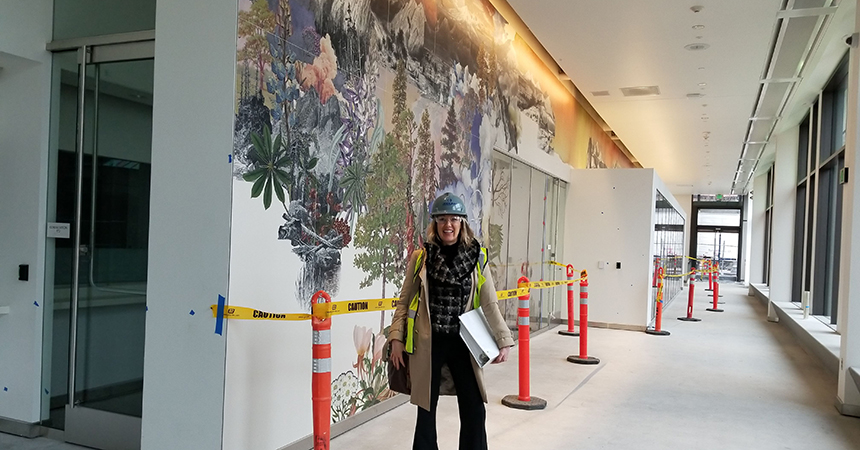
Summer at the Gladys McCoy Health Department Headquarters in Multnomah County, while under construction. She was hired by ZGF Architects to assist with sustainability and equity throughout the project.