
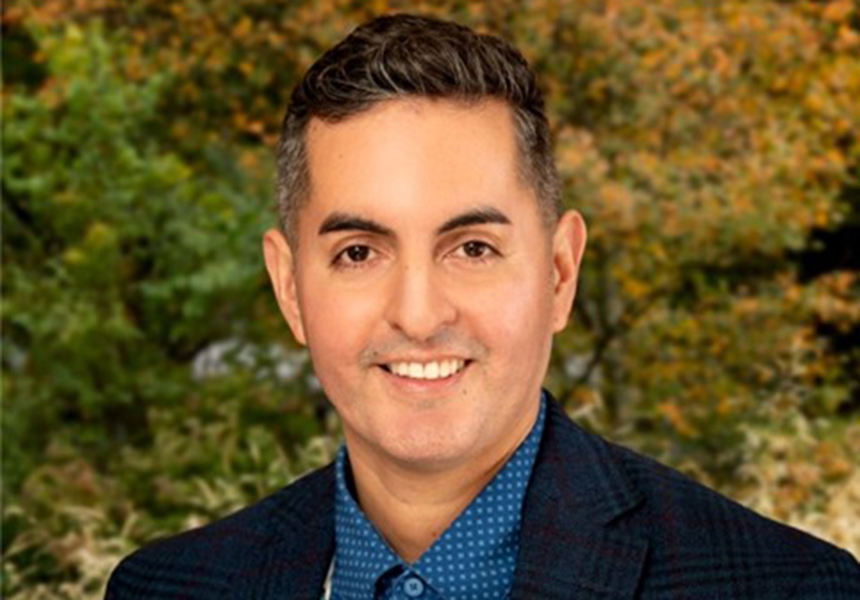
This is a part of a series of blog posts amplifying community voices. These views reflect the perspective of the Changemaker and do not necessarily represent those of Energy Trust of Oregon.
Oscar Arana spent much of his childhood in Mexico before moving with his family to the U.S. in the late 1980s in pursuit of a more stable future. Though there were positive outcomes from the move, Oscar’s experience drives his commitment to supporting Indigenous communities and culture today, as migration and displacement can sever connections to cultural traditions. As CEO of Native American Youth and Family Center (NAYA), he is dedicated to ensuring the Portland-metro region’s Native American community can access wraparound programs that support families, from infants to elders, stay connected to their culture, and create a sense of place, belonging, balance and stability.
Was there a person, or experience that first sparked your interest in community work and social justice?
My mother was pivotal in shaping the person I am now. When I was in first grade, I remember coming home from school and making an unkind comment about another kid who wasn’t doing well in class, and she said, “Instead of judging them, you should think about how they might not have as much support as you do, and you should help them.” It was certainly a humbling moment, though I don’t think she realized it would mean I’d start bringing classmates over to our house after school so she could tutor them. Because of that experience, I’ve always thought about and enjoyed helping others.
I also had to grow up faster than most kids because I was helping my parents by translating and interpreting for them. I often found myself filtering messages to avoid having my parents hear condescending, unkind or biased comments. There were also times in high school, in the late ’90s, where I would hear racist remarks, and teachers would choose to ignore or avoid the interaction because they weren’t prepared to interrupt, facilitate dialogue or turn it into a learning opportunity. That has stayed with me, as I’ve seen the difference it makes to offer community support from within the community.
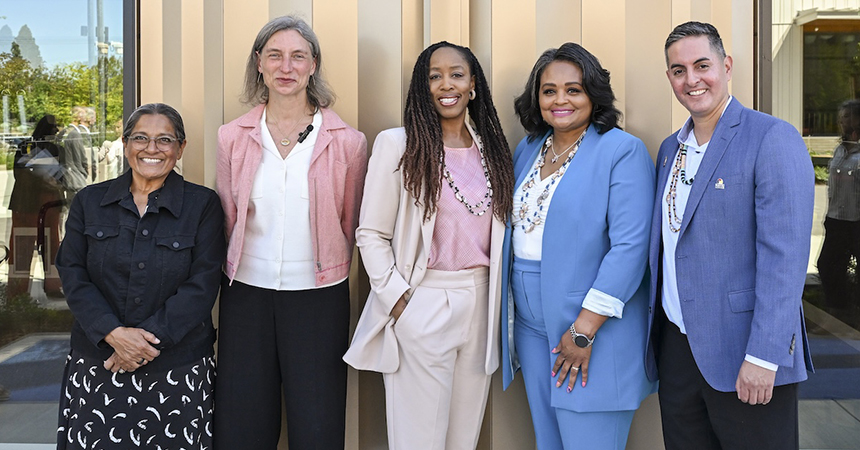
At ribbon cutting of the Home Forward, PCC and NAYA development with Director of Family Services and State Representative Tawna Sanchez; Congresswoman Maxine Dexter; Dr. Adrien Bennings, PCC President; and Ivory Mathews, Home Forward CEO.
What do you see as the most pressing climate and energy challenges facing Portland-metro communities, particularly communities of color and low-income neighborhoods?
One of the many things that keeps me up at night is how quickly and severely climate change is happening globally and locally as well. Extreme heat, flooding, wildfires and freezing temperatures are all constant threats now. It’s impacting everyone, but I am particularly concerned about the community who gathers at NAYA and the families we house across the region. If our elders are snowed in, how do they get to NAYA for the meals we provide? We don’t have the equipment or vehicles to safely deliver meals to them if the roads are covered in ice. Or if we have weather in the triple digits, how do we ensure our families and elders are able to access air conditioning or a cooling shelter?
Heat is really hard on folks who live in third- or fourth-floor apartments, and we’re working as quickly as we can to get them portable air conditioning as well as permanent solutions. The families living in our units are on fixed or limited incomes and may not have friends or family who can support them when an emergency happens. Staying at a hotel or even moving are not affordable options for the families we work with. So for me, the central challenge is the human toll of these weather events, and our capacity to respond at the pace required to protect people.
How do you leverage your connections in the Portland community to advance energy efficiency and climate justice initiatives?
I served on the Oregon Health Policy Board for many years, and during my time at the Oregon Health Authority we launched a statewide initiative that helps improve living conditions for residents on fixed incomes. NAYA also partners with the Portland Housing Bureau to implement a home repair program to improve safety and living conditions primarily for low-income and elderly residents. These types of programs help keep people in their homes, improves their health and living conditions and even maintains affordability because it prevents older homes from easily being sold and redeveloped.
There’s only so much we can do within the existing system. Too often, important programs with good intentions are too restrictive, so we are unable to use public dollars to meet a larger public need. That’s why we’re actively working to achieve the future our people deserve and advocating for better deployment of resources. NAYA was one of the many partners who advocated for and won the voter-approved Portland Clean Energy Fund (PCEF). Our hope is that PCEF dollars can be deployed even more rapidly to support the emergent needs of our most vulnerable, and to build up the infrastructure that will keep our communities safe from climate threats.
One of the things I’m most proud of at NAYA is the recent redevelopment of Tistilal Village, one of our affordable housing properties. It was originally built in the early 1970s and was long overdue for a complete overhaul. NAYA assumed ownership in 2008 and worked with many funders and partners to redevelop it into something we can all be proud of, especially because we supported every resident who wanted to return to living there once the project was complete. PCEF funding helped us integrate critical energy efficiency upgrades and resident amenities in the building, including air conditioning for each unit — an uncommon amenity in affordable housing.
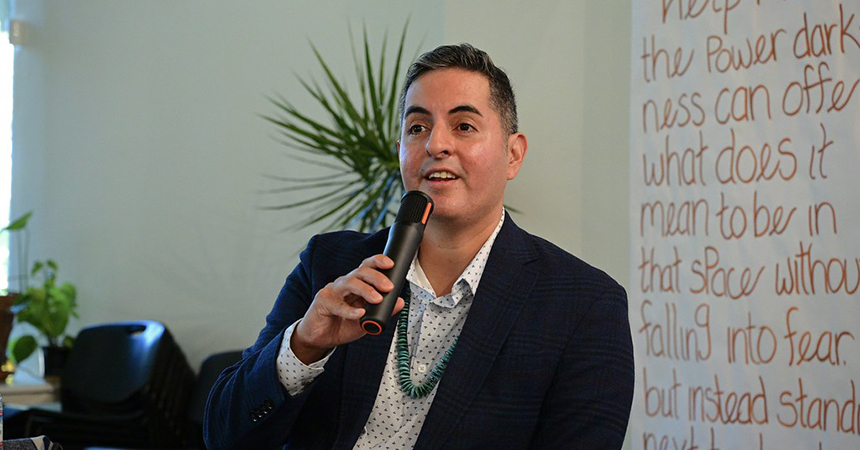
Speaking at the Tribal Housing Solutions Roundtable, September 2025.
What’s your assessment of Portland’s progress on climate equity, and where do you see the greatest opportunities for impact?
I try to focus on strengths, but things can always be better. PCEF is an incredibly helpful program; it’s also only one source with lots of limitations. We need to broaden our idea of climate equity and energy efficiency and think about social determinants of health. Carbon reduction strategies are of course important, but there’s a needle to thread in protecting our most vulnerable community members from the impacts of carbon that’s already out there.
Rather than try to solve all of Portland’s climate challenges, my focus is to advocate for resources to support the unique needs of the Native community. Most of NAYA’s 10-acre campus, located in the Cully neighborhood, was built in the 1960s and parts of it go back to the 1940s. We operate a high school and more than 40 wraparound services on our campus. Our garden, Wapas Nah Née Shaku, and our kitchen, provide meals for thousands of people each year.
We envision our campus becoming a resilience hub, where people could go for support in case of a major climate event. One of the first steps is to replace our roof (for which we recently got state funding), as the existing one is failing and nearing the end of its useful life. We also need to reinforce our building by implementing seismic upgrades. These are not considered “sexy” projects that excite funders or donors, but they are critical needs to ensure NAYA remains a safe and accessible space where future generations can connect with culture and community.
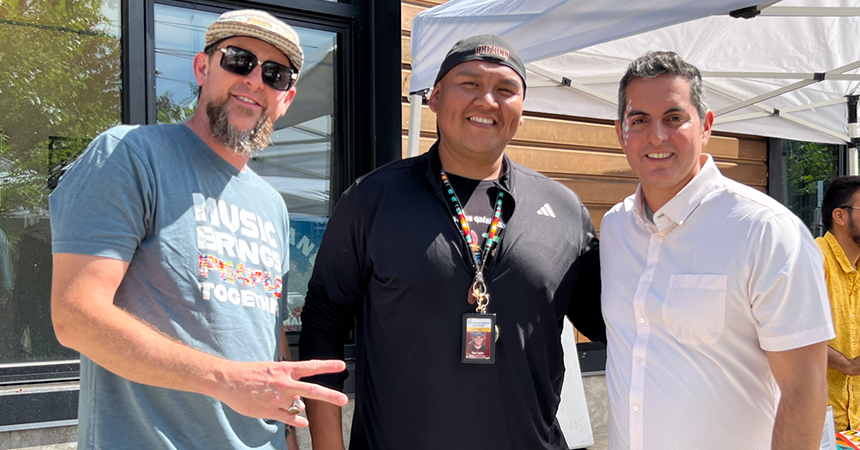
With community members at Mamook Tokatee annual block party last summer. Mamook Tokatee is one NAYA’s three affordable housing developments located in the Cully Neighborhood.
What’s your perspective on ensuring that central city redevelopment advances climate goals while not displacing lower-income residents or increasing energy burden?
NAYA is currently establishing a cultural corridor in Cully where our community can access housing, jobs, education, early childhood services and cultural support. We are developing various opportunities near each other, so the Native community can be close to each other for support. We helped establish a new governance model for how urban renewal funds are spent in Cully, so that they stabilize and benefit current residents instead of displacing them. And our support extends to everyone in the community because that’s how Native communities have always operated. What we’re doing in the Cultural Corridor can serve as a model to inform the future of other areas of Portland, including downtown, which has the potential to become a great place to live, work, learn, play, embrace culture, practice spirituality, enjoy art and thrive.
What would you say to someone considering a career in this type of work?
My advice is to seek community and really understand who they are, who they’re connected to and who they want to be. I feel so fortunate to have connected with NAYA in my early 20s and to have NAYA be there for me for more than two decades. After more than 16 years working at NAYA in various roles, this is more than a career for me. It has become a big part of my life. A strong sense of culture and identity leads to success and that’s what NAYA does for everyone who walks through our doors. A stronger connection to culture can also be a lifelong journey, and that’s what it is for me. This work can be very challenging, but it can also be extremely rewarding.