
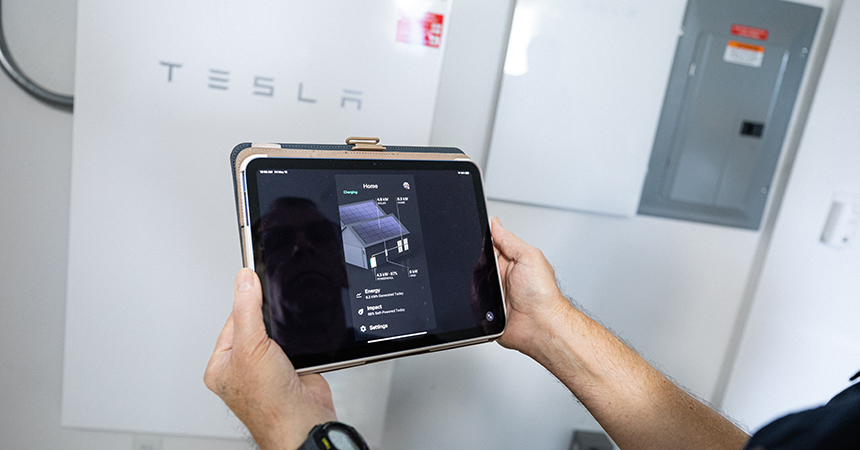
Installing solar plus battery storage can boost your home’s energy independence and resilience. You’ll control your electricity bills for years to come and keep essential equipment running during outages. But how much of your home’s electrical needs can you support with solar panels and backup battery storage? It depends on battery capacity, appliance demand and solar production.
The key to battery storage planning is to decide which circuits and devices your household cannot go without, then work with a qualified solar contractor to design a home battery system around those priorities.
Why more Oregon homeowners are considering backup power
More Oregonians are seeing a need for year-round backup power. Severe fall and winter storms frequently bring down power lines. In summer months, public safety power shutoffs are happening more often because ongoing drought conditions are increasing the risk of wildfires. It’s no wonder that homeowners are seeking the security and convenience that solar + storage provides to keep their homes powered during outages.
How many items can one battery support? It may surprise you
Many Oregon homes with solar + storage installations have one 13.5 kilowatt-hour (kWh) battery. While that size battery won’t provide whole-home backup, it can typically provide enough power for essentials like:
- Refrigeration
- Lighting
- Wi-Fi*
- Phone chargers
- Security system
- Microwave
- Home medical equipment such as a CPAP machine
- Garage door opener
It’s important to understand that battery capacity and power output determine different things. Capacity, measured in kWh, affects how long appliances can operate. Power output, measured in kilowatts, limits how many appliances can run at once. Higher-power appliances will use the battery’s available energy faster than a few lights and a phone charger.
Actual backup time depends on the battery’s usable charge, household demand, weather and how much solar energy is available to recharge it. Remember, even on cloudy days, solar panels can still generate clean energy to recharge the battery.
Need more power? Consider more batteries
If you want to power more items like a well pump, sump pump, television, furnace blower or chest freezer, you may need more battery capacity and power output. High-demand loads such as air conditioners and space heaters, as well as whole-home backup, will require a robust, multi-battery system.
Solar + storage works automatically, safely
Once you install solar + storage, how does it work? The solar panels will generate clean power for your home and excess power is saved in your battery storage. If a storm or disruption on a power line triggers an outage in your area, your home will automatically disconnect from the grid and draw from your home battery backup to power the circuits you previously selected. There are no worries about fuel, noise, exhaust or risk of carbon monoxide poisoning. (Read our previous blog post about why solar + storage has the edge over portable generators.)
Energy Trust incentives lower the cost of solar battery systems
Portland General Electric and Pacific Power customers qualify for Energy Trust cash incentives for solar and battery storage, reducing out-of-pocket costs. We offer increased incentive amounts for income-qualified households. Select Energy Trust solar trade ally contractors also offer Smart-E solar financing with transparent terms and low, fixed rates, which make it easier to fit solar + storage into your household budget.
Get started with a free analysis and bid
If you would like to talk with an Energy Trust solar trade ally contractor about solar panels and battery backup for your home, request a free, no-obligation analysis and bid. Energy Trust trade allies are qualified experts who can discuss your solar + storage goals, assess the potential of your home for solar power, explain how much you can expect to save with solar and help you identify a battery backup plan for your home.
*Assuming internet service lines are undamaged.