
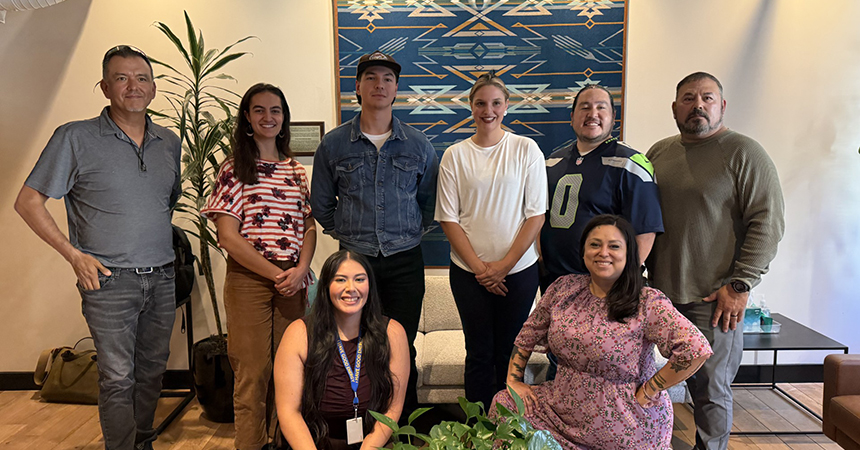
In 2022, Energy Trust staff identified the need for a Tribal community-centered group to provide guidance on priorities, needs and new ways for the organization to serve Tribal governments, members and organizations. The Tribal Working Group launched that year, with facilitation and initial recruitment led by Caryn Appler, outreach lead.
Today, the group includes six members of Oregon’s federally recognized Tribes who have an interest in energy, as well as a representative of the Columbia River Inter-Tribal Fish Commission. The group is now led by Carina Miller, Energy Trust’s Tribal government and stakeholder relations manager.
With Carina’s facilitation and the support of staff across the organization, the group has been working to help Energy Trust increase its capacity to work with Tribal communities by deepening understanding of their priorities and creating more meaningful engagement.
On October 3, working group members from across the state and California gathered at Energy Trust’s office for an inaugural all-day, in-person retreat, where they focused on getting to know each other better and engaging in thoughtful discussions about the opportunities and challenges facing Tribal communities.
“We know many of the larger barriers that keep Tribal individuals from receiving services and accessing energy projects, but we need to better understand how we can go further to actually transform the way we serve them,” said Miller. “The Tribal Working Group is helping Energy Trust better understand where our current approaches fall short and what meaningful change could look like. The perspectives shared by members can help shape how we build relationships, conduct outreach and design programs that better respond to Tribal priorities.”
This work involves more than just adapting existing energy efficiency and renewable energy offers. Energy Trust needs to work toward going deeper to understand the unique needs of Tribal communities and bring innovative solutions that work for them.
For example, because Tribes face increasing climate risks from wildfires to flooding, there is high interest in increasing energy and water resilience. Existing resilience solutions, like solar with battery storage, may not work for Tribal communities as currently designed. The working group is helping Energy Trust think about how energy solutions could support the resilience of important Tribal infrastructure.
At the retreat, members highlighted the need for Energy Trust to continue growing its capacity for this work. The group identified actions like improving information and data sharing practices with Tribes, increasing engagement at Tribal events and conferences and exploring new partnership structures.
“We are laying the first brick in a foundation that will help Energy Trust serve Tribes in more meaningful ways,” said Miller. “Tribes want more than consultation. They want co-leadership and true partnership.”
The working group identified opportunities to create sustainable, long-term Tribal capacity to do energy projects and expressed was strong support for creating career pathways for Tribal youth and building a skilled workforce that can complete energy projects.
The current working group has seven members:
- Ellsworth Lang, Klamath Council member (also serves on Energy Trust’s Board of Directors)
- Aaron Luke, Umatilla
- Savannah Holliday, Warm Springs
- Mariah Watchman, Umatilla
- Sean Lawrence, Sazan Group
- Eric “EJ” Jordan, Grand Ronde
- Maya Beauvineau, Columbia River Inter-Tribal Fish Commission intern
Over time, the group aims to expand beyond its existing seven members to include representation from all nine of Oregon’s nine federally recognized Tribes. It also hopes to include perspectives from unrecognized Tribes and other Indigenous communities in the future.