
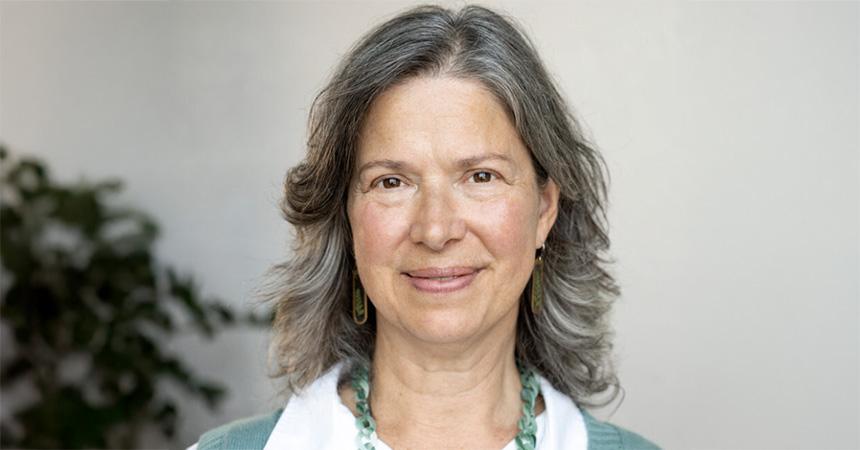
This is a part of a series of blog posts amplifying community voices. These views reflect the perspective of the Changemaker and do not necessarily represent those of Energy Trust of Oregon.
Heather DeGrella’s journey into sustainable design began in the forests and creeks of her family’s campground, where she spent childhood summers exploring nature and absorbing her father’s conservation ethos. Now, as Sustainable Design Director at Opsis Architecture, she channels that early connection to the natural world into projects that combine environmental sustainability with human wellness and social justice. DeGrella guides design teams through holistic processes, from immersive site walks that engage all the senses to collaborative visioning sessions that keep sustainability goals centered throughout a project’s lifecycle. Her work reflects a deep belief that buildings impact far beyond their physical boundaries, touching supply chains, communities and the environment itself.
You seem to have tireless passion for green building and sustainability. What sparked that passion? Was there an early moment, place or a person, that made you realize this was the work you wanted to dedicate your career to?
It was inspired at an early age, for sure. When I was about four or five, I remember my dad announcing that he had just bought a campground. We lived outside of Nashville at the time, and the campground was a little further out. We lived at the campground in the summers and visited often in the winter. I roamed the creeks and forests with the camper kids.
Sustainability was an ethos I grew up with. We recycled even though curbside service wasn’t available then. The house where I grew up was on old farming land; it was developed into single family residential lots around 1970. My dad was a nature lover, and planted 100 pine trees in our yard, installed a solar water heater and did a multitude of weatherization upgrades. He brags that his current energy use is less than it was in 1971 when he started doing all of these things. But he also conceded that he no longer has three daughters living with him, “washing their puffy ’80s hair.”

With her father at her childhood home in Tennessee.
How did you find your way into sustainable design? Was it part of your education from the start, or did you discover it along the way? What was the built environment or design education landscape like when you were starting out?
My undergraduate studies were in art history. But I was a member of the Student Environmental Action Coalition and went to graduate school for architecture, which makes good use of art and math. University of Texas at Austin didn’t have a specific degree or certificate in sustainability, but I took all the classes I could on it.
I also worked for a firm as an intern when the Austin Energy Green Building program was getting going. I was able to help the architects learn what they could do with that program and start to use it in their work.
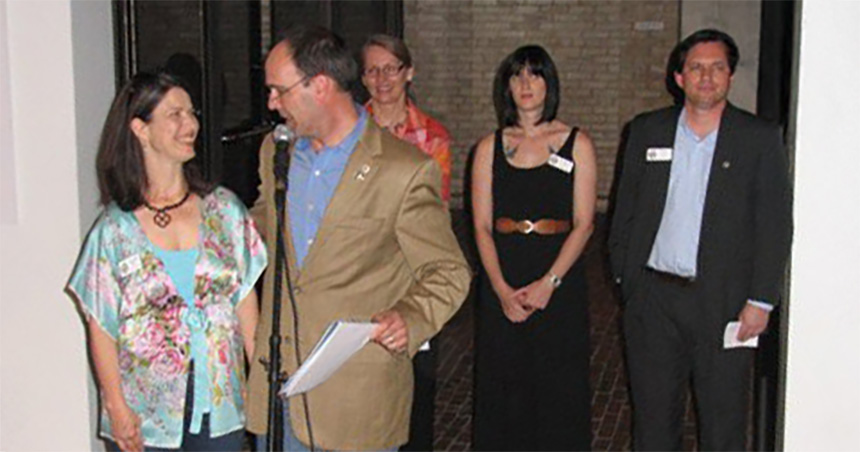
Heather was a founding member of Central Texas’s U.S. Green Building Council chapter, and served as board chair from 2008-2009.
You focus on not just environmental sustainability but also wellness and social justice. How are these three goals connected in your work?
We need to address impacts on wellness from building materials, carbon, as well as the impact on the environment and workers when they’re manufacturing the products. There is still a lot of work to be done in the supply chain around hidden labor practices that victimize vulnerable people.
Grace Farms Foundation is leading that work, and they have a toolkit to help architects use the right materials and design direction to help avoid the supply chain issue of poor labor practices. We need to always remember that when we design and build buildings, we have huge impacts well past the project’s physical boundaries.
You work to ensure “the environment, wellness, and the whole person are reflected in project designs.” That’s a broad and ambitious goal. How do you capture and incorporate the needs and perspectives of all these stakeholders?
With architects and stakeholders, I’m a generalist who looks at everything. We kick off every project with sustainability visioning and what it will mean for the goals of the project, which helps us build a sustainability action plan that is holistic, which we follow very closely throughout the project. It guides us to make sure we don’t leave parts of the conversation behind.
Having those meetings documented is a simple thing, and important. To be able to continue to come back to those initial plans, even when a project gets value engineered or reduced in scope, is helpful. It facilitates check-ins and shows us how the project has evolved and where we can still make sustainability goals happen in a way that works with new factors that might come up.
At Opsis, we use virtual whiteboards that are simple but robust. It’s a space everyone can access, see the conversations we’ve had and the sticky notes and statements, and see it evolve. It is such an accessible tool for following the story along the way.
Your use of “emotive, biophilic exercises” to help people express design ideas is intriguing. Can you describe what these exercises involve? How does engaging people emotionally and through their connection to nature unlock better design outcomes?
One of our favorite things to do is an immersive site walk, because engaging all of our senses in a project is important. If you have a site with even the smallest amount of nature, there are things you can hear, smell and see that can bring up an emotional response. It helps us center and focus on what’s important to preserve, and to seek out to feel safe.
On these walks, we’ll take photos and notes and discuss them. It helps ground the project in the realization that we evolved with nature and that it’s important to bring nature into a building to be comfortable and happy when you’re there.
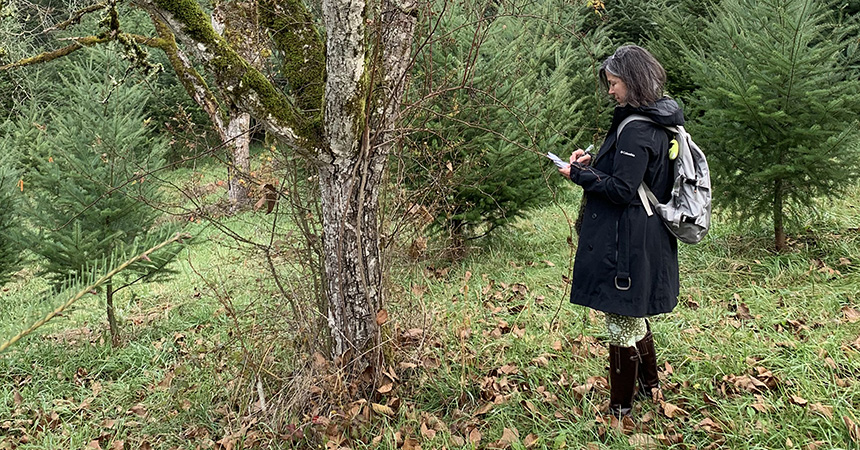
Heather at a Biophilic Site Walk at Catlin Gabel
Over 25 years, you’ve witnessed the green building movement evolve significantly. What’s changed and how can we continue to improve?
I lived in central Texas for a long time, and back then the bar was so low for sustainability that the trajectory for making things better was contagious and energizing. Legislation was being passed, and LEED was ramping up. There was a lot to be done, and things moved quickly. There was also a lot of involvement from younger people.
Today there are still so many big problems, and we may not be solving them fast enough. Young people still support sustainability but are coming into an established system, rather than a movement. We need to make more space for the younger generation to lead and be more flexible.
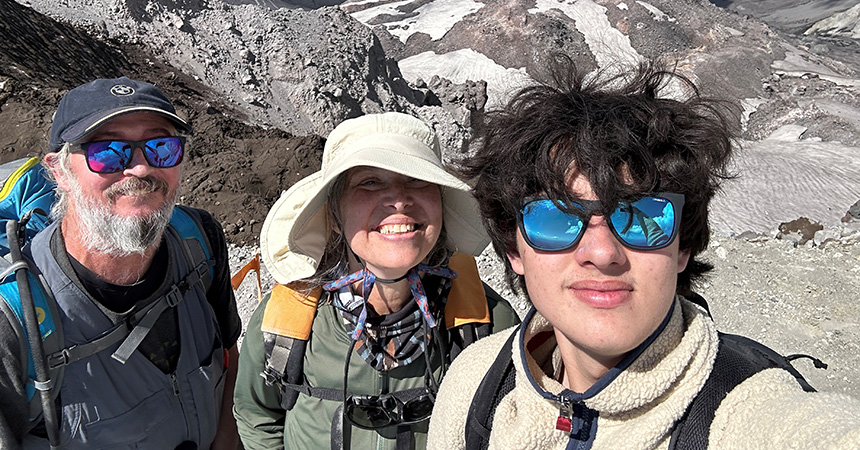
With her husband and son at the summit of Mt. St. Helens
What’s on the horizon that excites you? Are there emerging practices, technologies, or approaches to sustainable design that you think will change how we work?
I’m super excited about 3-D printing and the flexibility and imagination it could bring to our work. It could help us rebuild after catastrophic events, when there aren’t enough workers — 3D printing can pick up some of that slack.
I’m also encouraged by the use of more natural materials to replace concrete and the carbon issues it brings with it. Hemp, reclaimed wood and straw are all proving to be good alternatives.
What would you say to someone just starting their career in sustainable design? What skills, perspectives or experiences should they seek out?
Don’t get overwhelmed; there is so much to be done. It’s OK to be a generalist or to focus very narrowly on a topic because it’s all important. Don’t assume people are already doing it and doing it right; speak up, ask questions. If you get stuck, ask, “What would nature do?”
I would also remind everyone that we have a great community around sustainability not just in Portland, but around the country and the world. It’s important to get out and meet with others in your field. It can lead to collaborations, finding camaraderie, sharing information and holding each other up when you need it.